Showing posts with label Employee Involvement. Show all posts

Thursday, August 25, 2011

Why Behaviors Don’t Represent a Person’s Nature

Smoking Jack SparrowYou can’t trust the outwardly presented behaviors of people to accurately represent their real personality or nature. Often behaviors that look “bad” are driven by something outside of the individual’s control. Look at the scenario below as I reveal more information in “The reality”.

The natural assumption

I was walking out of an attractive office building and saw two people about to enter the entrance to the foyer. The guy flicked a cigarette out onto the large outdoor brick and concrete entryway surface. Wow, I can’t believe that guy just did that. A still smoldering cigarette littering the clean decorative sidewalk. What would this tell you about his character?

The reality

When the man and woman first came into my view, the woman was gazing about as if she was looking for something. The man appeared to be looking at the outdoor trashcan with a puzzled look on his face. Just before flicking the cigarette, he shrugged his shoulders out of what looked like frustration. Neither of them noticed me until they were already inside the building.

The office complex was a smoke free campus, but it was not very well marked on the property. There was no cigarette butt receptacle near the entrance. Clearly the man didn’t want to put his butt in the trash can and risk starting a fire. Both of the them were looking for a safe place to dispose of the cigarette - they were conscientious people wanting to do the right thing.

In business, how we treat people and and their ideas are often influenced by our impression of their personalities as perceived through their behaviors. We can be dismissive, judgmental, and exclusive. None of those are conducive to getting the most creative ideas for improvement and support for change.

When you see “bad” behavior at work, instead try assuming there is an underlying issue driving that behavior and let them prove you wrong. If you are a leader, try to find out the root cause and drive it to resolution. Thoughts?

Wednesday, August 17, 2011

Personality Strengths and the Pinky Swear

gymnastics vaultThis is a true story about two talented High School gymnasts, Pam and Lisa, and their challenges overcoming  pre-event nerves.

Event

The event is the Vault. What differentiates this event from the others, is the gymnast is scored on two vault runs. They have the option of bailing out at the last minute and not performing on a run if it doesn’t feel right. This obviously can have a negative affect on their score, so it is not desirable, unless there is a safety concern.

Background

Both gymnasts have complicated routines that despite repeated practice, they don’t feel 100% confident in their ability to execute them perfectly. That is where Molly “The Motivator” comes in. Molly is a fellow gymnast, but wasn’t competing because of an injury. Pam and Lisa have grown accustom to relying on Molly, above all the others, to motivate them to victory. I say motivate because each of the two gymnasts responds to completely different stimuli.

Pinky Swear

Molly recognizes the strengths of their personalities and what drives them to perform at their best and she emphasizes those strengths when she cheers them on.

Lisa always repeatedly performs better when Molly psyches her up before the event and cheers loudly and enthusiastically for her through the duration of her routine.

Pam is perfectly capable of a near perfect Suke, but her tall height creates an additional challenge for her that impacts her confidence. She routinely walks off after a run before hitting the springboard. However, unlike Lisa, Pam doesn’t respond to positive reinforcement and cheering. During competition, Molly knows she can leverage Pam’s sense of responsibility by having Pam “pinky swear” that she will complete the run and finish her routine. With their pinky swear in play, Pam consistently performs and scores high as a result.

Leadership Lesson

Molly looks at the strengths of each of the gymnasts and individualizes the treatment to what they personally want and need to succeed. It’s for that reason Molly is considered the “go to” person for getting the most out of the team.

It doesn’t matter whether the subject is sports or business, individualizing communication based on the strengths and personality of the individuals generally delivers positive rewards for all of the parties involved.

*The names have been changed to protect the identities of the people in this story.

Tuesday, October 19, 2010

Five Ways to Incorrectly Use Technology

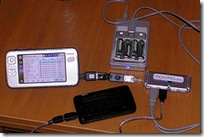
Device with multiple dongles How you adopt technology in your personal life is a personal choice. How technology is used in an organization affects many others, requiring careful consideration to provide its benefits without negative repercussions.

The top five ways organizations incorrectly use technology:

  1. Implement a technology for technology’s sake.
  2. Pick a technology because it is cool, trendy, or new.
  3. Use it to fix a broken process.
  4. Introduce it without adequate trials or testing.
  5. Pick the version with the most bells and whistles.

I’m a big proponent for the use of technology when it is used in a way that truly supports the organization from every perspective. Nobody Likes Bad Change™ in technology, work, or life. Let’s do our part to introduce only good change:

  • use the right technology
  • for a specific process
  • considering the available resources
  • at the appropriate time
  • to achieve the desired outcome


Photo credit: Qole Tech / CC BY 2.0

Friday, July 9, 2010

Open and Honest Feedback after a Scolding

tiger photo courtesy of http://www.flickr.com/photos/tambako/4221228933/ A friend, Jaime*, recently sold his successful business to a similar, but larger corporation, ACME*. During the transition, he is helping them transfer and integrate the assets and processes into their existing business and support the retention of Jaime’s previous customers.

During a periodic review with ACME’s management, Jaime noted several practices that their employees were using that he offered to help them improve. A manager at ACME proceeded to scold the employees about their lack of process adherence and mistakes (mischaracterizing the suggestion). Jaime was disappointed about the way ACME handled the interaction. Jaime and I were reflecting on his frustration about the damage that behavior does to employee motivation, cooperation, and morale. After that incident, Jaime will get very little open and honest feedback from the front line workers about their challenges and opportunities when he visits.

Jaime isn’t continuing to help for his financial benefit; he wants the same thing the employees want. His interest is to see them take a previously successful business that was built over years of hard work and incorporate it smoothly and painlessly into their operation.


*Names have been changed to protect their identities.

photo attribution http://www.flickr.com/photos/tambako/4221228933/ / CC BY-ND 2.0

Tuesday, November 10, 2009

Project Failure - Just Set It and Forget It

ticker photo courtesy sxc.hu user: cybersnot Improvement projects are always at risk for project slip and subsequent failure. It is necessary to be tenacious about communication and countermeasures to prevent. One of the most dangerous times is after initial release of new tools, software, or processes. Communication and feedback are most critical here. It is often easier for people to slip back to the old way than pick up something new – even if you perceive the new way as being easier. Don’t just walk away, even if it looks like a slam dunk.

There are two ways that resistance to the new process show up:

  1. Vocal communication
  2. Silent death

In the case of vocal communication, make sure to pay close attention to the concerns being voiced. They may sound like complaints, but they are really the ticket to success. If you can address their legitimate concerns, people will hop on board and bring others with them.

If all things are quiet with a lack of feedback or communication, proactively look closely for the presence of warning signs. Hesitating to uncover silent concerns and put countermeasures in place quickly will drastically reduce the momentum needed to get the best result. That is how so many corporate initiatives become “just another corporate initiative”.

Tuesday, October 13, 2009

You Might Have the Wrong Plan If…

ChangeCartoon

You might have the wrong plan or approach to solving a problem if:

  • The leader or project owner comes into the problem solving meeting with a list of action items already formulated and starts delegating them to the “participants” in the meeting.
  • People are talking negatively about the plan in their cubicles or around the water cooler and no one is stepping out as a spokesperson for why it is the right plan/approach.
  • Groups of people are openly showing resistance to change.
  • The attendance at the status meetings declines every time the group meets.

You are on the right track to a good plan if:

  • People eagerly start listing activities that need to be accomplished and volunteer to take care of them (following through).
  • People in the participant group are heading off resistance from others without escalation to the project owner or leadership.
  • People have a sense of pride and ownership of the process they have a hand in crafting.

This is most applicable when the problem at hand crosses departmental and/or geographic boundaries and would be best solved using true employee involvement from a cross-disciplinary team.

* I’m obviously not an artist so please cut me some slack on the cartoon.

Monday, August 17, 2009

Data Tells a Story, but are You Reading the Whole Story?

spc_chart Eighteen years ago I learned an important lesson about the intersection of data and people. The data alone rarely tells the whole story.

The engineering manager was preparing his weekly report for the staff meeting. He asked me, the intern, to investigate a SPC (Statistical Process Control) chart gone wild and summarize my findings. The chart graphed several “critical” dimensional characteristics of a headlight reflector for one of the highest selling vehicles at the time. This was a simple task.

Injection molding is a complex process, so the machines were instrumented with several sensors to monitor and record important process parameters. I strolled down to the production floor control room and pulled up the historical data from the data acquisition system for the previous week. I saw a dramatic change in several readings which were consistent with the dimensional hiccup on the SPC chart. Based on the readings and my knowledge of the injection molding process, I could predict which process settings were probably changed by the technician.

Ahh, the Story is developing.

I went out to the machine where the parts were being made and checked the Process Deviation log to verify my predictions and see if the technicians documented any changes. For the most part they did, and I was correct in my analysis of which process settings were changed. I also verified the gage at the quality check station was calibrated and working properly; it was.

I summarized my findings in a report based on data I collected in the control room, the shop floor, the quality check area, and the SPC chart. Unfortunately, I was missing one source of data from my findings... the technician who made the changes.

When the manager’s weekly report came out with a small reference to the Dimensional problem, the 2nd shift technician was upset because he felt like he was being unfairly criticized for deviating from the standard approved process and for causing the problem. He left a “See me” note on my chair.

And now the rest of the Story

The technician “kindly” explained to me that the reason for the dimensional problem was that the mold, which is normally water cooled, developed a crack in the steel that caused water to pour out of the mold (bad). Normally the mold would be taken to the tool room to get repaired, but the part it was making was for one of the highest selling cars and the other duplicate mold was already in the tool room for routine maintenance.

In order to keep the mold cool and maintain a safe work environment (no water all over the floor and machine), they ran compressed air through the water lines. This required numerous changes to the machine settings to keep the dimensions in the functionally acceptable range. The dimensional variation was much different from normal, but was still acceptable for assembly and to the customer.

Now regardless of whether or not it is consistent with best practice to run the mold in the non-standard condition, it was obvious the technician was doing his best to work in the interest of the company. Unfortunately, by neglecting to check with the person responsible for making the process changes, my report left the impression the technician was just not doing what he was supposed to do – something others might assume to be evidence of bad intent, laziness, or some other negative trait. This could have been avoided by applying the following advice:

“In order to understand why somebody does something, you’ll find the answer faster if you look for what’s right about their behavior, rather than what’s wrong.”

Craig Henderson

The above quote was taken from the presentation Nobody Likes Bad Change by Craig Henderson. This is a philosophy that has guided my work since that day - long ago.

Friday, May 15, 2009

Questions Lead – Answers Follow

One of the fundamental mistakes I have seen repeatedly that leads to the loss of expected impact of improvement to a business process is making changes based on individual observations, education, and experience alone. What is missing is asking questions of all the people impacted by a proposed change. The people that operate, support, audit, and reap the benefits of a process, collectively referred to as stakeholders for the purposes of this post, often have valuable knowledge about a process.
Processes are used to complete a task, or multiple tasks, repeatedly in a consistent manner. The nature of the repetition gives the local stakeholders many observations with which to build a mental repository of data about a process. There is one tool (often under-utilized) at everyone’s disposal that allows the harvesting of that valuable data. Asking questions will yield valuable insight about exceptional conditions, frequencies and probabilities of occurrences, pareto of key information, historical perspective, and trends. The information may not appear as reliable as data from a sophisticated electronic data collection device, but undervaluing it will certainly reduce the effectiveness of an “improvement”.