Showing posts with label User Experience. Show all posts

Thursday, May 31, 2012

Gamification has a Place in Business

gamificationWhy would I want silly games in my business? Won’t that just give people another reason to goof off at work? Gamification isn’t about making games, it is about applying to processes and communication the same type of techniques that keep people interested and engaged in playing games.

Wikipedia has a great definition, an excerpt below:

Gamification is the use of game design techniques[1], game thinking and game mechanics to enhance non-game contexts.

Before you go and jump in the pool and enlist someone to gamify all your processes, understand that in order for it to work and provide tangible benefits to the organization, the psychological and emotional rewards offered need to be in alignment with what you are trying to accomplish. Additionally the behaviors that are being rewarded need to be carefully evaluated to prevent the inadvertent reward of undesired alternate behaviors, such as “gaming” the system or introducing a type of peer competition that can be damaging for morale.


photo credit: JD Hancock / CC BY 2.0

Friday, June 17, 2011

A Common Language is Half of the Utility

GPS in FrenchI was reminded about the value a common language has on the usefulness of tools through a recent experience with my GPS.

The Story

I loaned my GPS to French exchange students for their trip to New York City.

After they returned, I turned on my GPS to set a destination and all the text and menus were set to the French language setting. I’ve studied Spanish and German, but it was a little challenge to navigate through the French labels on the menus to find the setting to change it back to English.

The Power of Commonality

For the exchange students, the GPS would have still had considerable value to them on their trip even if they left it set to English because of the illustrations and graphical nature of the GPS (and like many Europeans they spoke English). However, when set to their native language, the GPS was far more useful as they didn’t have the distraction and pressure of translating and interpreting the audio prompts while driving in traffic.

A GPS is a powerful tool. But it is just that - a tool. A common language that is readily understandable to the users is a subtle, but often overlooked component of the utility of the tool.

The utility of a common language is a universal principle of business process design, supporting technology, and communication. It is far easier to ensure everyone understands the process and each other if everyone shares the same terminology, vocabulary, and usage. The same holds true with the technologies and tools that are used to support the processes.

Software and other tools are far more effective when the terminology, labels, and workflow incorporate the industry and company specific language and thinking native to the organization.

Tuesday, October 19, 2010

Five Ways to Incorrectly Use Technology

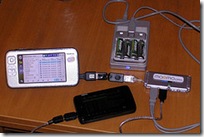
Device with multiple dongles How you adopt technology in your personal life is a personal choice. How technology is used in an organization affects many others, requiring careful consideration to provide its benefits without negative repercussions.

The top five ways organizations incorrectly use technology:

  1. Implement a technology for technology’s sake.
  2. Pick a technology because it is cool, trendy, or new.
  3. Use it to fix a broken process.
  4. Introduce it without adequate trials or testing.
  5. Pick the version with the most bells and whistles.

I’m a big proponent for the use of technology when it is used in a way that truly supports the organization from every perspective. Nobody Likes Bad Change™ in technology, work, or life. Let’s do our part to introduce only good change:

  • use the right technology
  • for a specific process
  • considering the available resources
  • at the appropriate time
  • to achieve the desired outcome


Photo credit: Qole Tech / CC BY 2.0

Monday, June 21, 2010

Resistance to Change – Inevitable or Preventable?

bad change I hear and read about resistance to change frequently. Most of the time it is referred to in a negative light or as an inherent human weakness. Wouldn't it be more productive if we focused on the “Change” itself rather than the “Resistance”?

We have all been on the receiving end of change that didn’t work out well for us, so it is natural to be apprehensive. If we think back to one of those “bad” changes, can we think of ways the change could have been approached that would have made it a better experience for the both the leaders and the participants?

Resistance to change can often be prevented – and I don’t mean through the use of force, quite the opposite. Just a few ways to improve the adoption of change is through the application of:

The general expectation is that change should be “good”. A common experience is that it isn’t. If change wasn’t actually “good”, we wouldn’t constantly be trying to introduce it. We should probably put more effort into making sure everyone that is impacted by the change understands the benefits and agrees that it actually is “good”. If they did, we probably wouldn’t be experiencing so much resistance.

Other posts about keys to successful change implementation

Wednesday, June 3, 2009

Debit Card Activation Improvement

credit card photo A colleague recently expressed his enthusiasm for another  Wells Fargo customer experience improvement. Your shiny new debit/credit card arrives in the mail, but before you can use it, you need to peel off the sticker and call the number navigating an automated menu to activate it. Who doesn’t put that off until the last minute? Wells Fargo has a new option – you simply insert your new card into the nearest ATM and enter your PIN. Voila! Activated. You still have the option to call or activate online, but if you use the ATM anyway, it is a compelling new “effortless” option.

It is hard to believe with the technology available, the concept wasn’t more widespread before now, but it shows signs that the banking industry is starting to put their technology to use to improve customer experience.

According to the 2008 Forrester’s Customer Experience Index (CxPi), in the Banking Industry Wells Fargo ranked third for “ease of use” out of the banks surveyed. The competition between a smaller number of increasingly larger banks brings welcome improvement.