Showing posts with label Waste. Show all posts

Monday, September 26, 2011

Seven Effective uses of Technology in Business

rocketmanThis is Part 2 in a series about the role of technology in business improvement. In Part 1 we explored Five Ways to Incorrectly Use Technology.

Organizations can experience significant benefits applying technology in scenarios where:

  • technology can be a catalyst for innovating around a process.
  • the majority of the perceived process waste has been removed.
  • the ability to improve the process without technology has reached its threshold.
  • technology is better suited for poka-yoke, such as eliminating math errors or guiding complicated work flows.
  • the risks of injury or danger to employees can be reduced or eliminated. Examples are un-manned military drones replacing pilots in hostile areas or using robots in automotive paint spray booths.
  • the mechanical burden of maintaining the process using manual methods becomes a hindrance to productivity.
  • information or collaboration needs to be shared across geographic boundaries.

photo credit: jurvetson / CC BY 2.0

Tuesday, October 19, 2010

Five Ways to Incorrectly Use Technology

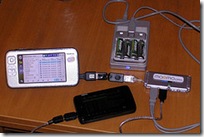
Device with multiple dongles How you adopt technology in your personal life is a personal choice. How technology is used in an organization affects many others, requiring careful consideration to provide its benefits without negative repercussions.

The top five ways organizations incorrectly use technology:

  1. Implement a technology for technology’s sake.
  2. Pick a technology because it is cool, trendy, or new.
  3. Use it to fix a broken process.
  4. Introduce it without adequate trials or testing.
  5. Pick the version with the most bells and whistles.

I’m a big proponent for the use of technology when it is used in a way that truly supports the organization from every perspective. Nobody Likes Bad Change™ in technology, work, or life. Let’s do our part to introduce only good change:

  • use the right technology
  • for a specific process
  • considering the available resources
  • at the appropriate time
  • to achieve the desired outcome


Photo credit: Qole Tech / CC BY 2.0

Monday, January 11, 2010

Workarounds – Dreaded or Welcomed?

labyrinth photo courtesy sxc.hu user: ctechs An associate was telling me about his friend being surprised when he referred to workarounds as waste. His friend had a positive perception of the term workaround. Why?

I can see why, for many, it could be considered positive. It is generally the last option before “impossible”, “failure”, or “no can do”. Anything better than failure is positive, at least in some light.

What image does workaround convey to me?

More than twenty four hours of consecutive problem solving under the intense pressure that tomorrow the customer will start charging $10,000/hour for downtime on their line because they are out of parts. The closer you get to the crisis the more likely you stray from looking for the solution to looking for a workaround. At 11:00am the next day that workaround looks pretty good – finally some sleep. But even with that comfort in hand you know it will be short-lived and others will have to deal with the extra effort it almost always requires to manage and operate a workaround.

Not all problems end in crisis as described above, but if you don’t think of them that way, it can limit your perception that things can be better. Workarounds are wasteful of time, money, and resources because they are either unreliable, inefficient, or unsafe. At best they should be considered temporary.

Below is the famous Rube Goldberg style Honda commercial. There’s got to be an easier way to close your trunk.