Monday, December 20, 2010

What is your Ultimate Professional Subscription?

swiss-army-knifeIf they offered a 12 month subscription to any or all the tools to equip you to be the best in your profession, what would it include?

Technology

I recently won a contest where the prize was a one year Visual Studio 2010 Ultimate with MSDN subscription. For a person that develops solutions using Microsoft technologies, there is no better prize. It is the Swiss Army knife of Microsoft Development. 

Here’s how I described the prize to my sister in terms she would relate to:

Construction

My brother-in-law is a  general contractor who does a lot of custom construction. He is constantly buying some new piece of equipment that he doesn’t have, but “needs” for this special job. If he had a Construction Equipment Ultimate Subscription, it would mean every time he needed a special tool like a spindle lathe, a vinyl siding cutter, or even a Bobcat, he would just take his subscription card to the local construction equipment store and redeem it for whatever non-perishable supply, machine, or equipment he needed that year.

The concept is really pretty Lean; get what you need, when you need it, in the form you want it.

Leave a comment to let me know what your Ultimate subscription would be.


photo credit: Jesse Sneed / CC BY-ND 2.0

Tuesday, October 19, 2010

Five Ways to Incorrectly Use Technology

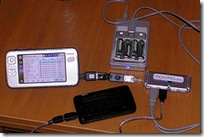
Device with multiple dongles How you adopt technology in your personal life is a personal choice. How technology is used in an organization affects many others, requiring careful consideration to provide its benefits without negative repercussions.

The top five ways organizations incorrectly use technology:

  1. Implement a technology for technology’s sake.
  2. Pick a technology because it is cool, trendy, or new.
  3. Use it to fix a broken process.
  4. Introduce it without adequate trials or testing.
  5. Pick the version with the most bells and whistles.

I’m a big proponent for the use of technology when it is used in a way that truly supports the organization from every perspective. Nobody Likes Bad Change™ in technology, work, or life. Let’s do our part to introduce only good change:

  • use the right technology
  • for a specific process
  • considering the available resources
  • at the appropriate time
  • to achieve the desired outcome


Photo credit: Qole Tech / CC BY 2.0

Friday, October 1, 2010

Closed Data Systems Limit Learning and Improvement Opportunities

tunnel vision Try taking data from a process you are working to improve out of the system you normally use and look at it in other ways. If it is in a proprietary spreadsheet or reporting system that has fixed standard reports and charts, take the raw data out and put it in a clean spreadsheet or database and look at the data from other perspectives.

Slice and Dice the data:

  • Filter
  • Sort
  • Aggregate
  • Graph
  • SPC chart
  • Pivot

Using fixed systems, while good for standardized daily analysis routines, can close our minds to opportunities, exceptions, patterns and trends that can lead to quick improvements and unexpected systemic breakthroughs.

photo credit: brian.chu / CC BY-ND 2.0

Tuesday, September 21, 2010

Three Tactics to Keep Project Activities Moving

electronic personal kanban

Regardless of the Project Management system, activities sometimes sit in the queue or in-process for extended periods of time. A few keys to keeping tasks moving to accelerate accomplishment are:

  • Break up larger activities into smaller subtasks. For example: break “resolve content management system issue” into “investigate CMS issue”, “identify possible fix”, “apply fix”, “verify the problem is resolved”.
  • Make the system more visible. The advantage of whiteboard systems is they are in line of sight more than electronic systems that are multiple clicks away. What gets watched often gets improved. The down side of physical systems, is they may not be portable and visible from other locations or by other people at a distance.
  • Collaborate with or solicit help from other people with more expertise or knowledge about the subject matter. Often technical people feel they are responsible for resolving issues themselves. Don’t be an Answer-Man Super Hero.

Lean Project Management is a comprehensive methodology based on Lean principles to minimize Work in Process (WIP) while maximizing valuable project completion.

There are a variety of tools that can help facilitate a Lean Project Management process. You can use spreadsheets, databases, Personal Kanban white boards, or any of the commercial or open source software based systems. Recently I have been experimenting with flow.io because of its simplicity. Cautionary note: Lean Project Management is about much more than a tool or software product.

No Lean system or process is perfect right out of the box. It is important to start simple and jump in and start learning your way to a system that meets your needs and the needs of your stakeholders.

Friday, September 3, 2010

Using Lighting Systems to Guide Standard Work

Several years ago I was working with a supplier to help them reduce the rate of defects to their customer. One of the specific defects was the parts packed on the pallet out of sequence. Their customer assembles products on a line where each product on the line is a different part number. The supplier’s objective was to pack the subassemblies on pallets in a sequence synchronized with the order their customer was building their product.

To make matters worse, each of the supplier’s customers worked in a different sequenced order when taking the components out of the pallets. Some customers took the subassemblies off the pallet in a counter-clockwise direction, others clockwise, or in a z-pattern. This made it too easy for the supplier line workers to accidentally pack the parts out of sequence. One misplaced part could cause a lot of expensive downtime to investigate and resolve.

I proposed a process at the supplier’s packing station that projected light into the correct position in the pallet to place the next subassembly (based each customer’s specifications) in the correct sequence order. It was a system similar to the one in the video - but they weren’t making mixed drinks.

Monday, July 26, 2010

Motivating Metrics

Pot of Gold If your employees are are not motivated to stay committed to contributing to the long term execution of a strategy that promises to have significant long term benefits, maybe they are looking at the wrong metrics.

Often the charts and dashboards that are displayed or presented publically are the ones the executive wants to see, however sometimes those are final output measures or lagging indicators. Lagging indicators often don’t work well as a motivating force. We are a society that favors instant gratification so motivation to continue on a given path is more likely to be positive when looking at leading indicators. Leading indicators are measures that are generally (and hopefully statistically) a short term predictor of the end result.


photo attribution http://www.flickr.com/photos/emi_photoart/3434442477/ / CC BY-ND 2.0

Friday, July 9, 2010

Guest Post: What to Do when there is More than One Boss to Please

Connecting People to Projects through Social Authority

Watch your head Dean’s note: This guest post is written by Craig Henderson, President of Systemental and a Thought Leader that blogs about Hoshin Kanri/Policy Deployment

You just took the handoff from the boss to start a new project.  You know you’ll need cooperation from a key stakeholder outside your function area who has already expressed a key concern.   How can you approach your conversation with the stakeholder to ensure you get the cooperation you need?

  1. Leverage the boss’s connection to the stakeholder in the right way:
    • If their relationship is good, start by saying so
    • If the relationship is neutral or rocky, start by saying you want to make this work for the stakeholder (note: you should sincerely want to do this)
  2. Get straight to the “heart of the matter,” don’t beat around the bush
  3. Discover the stakeholder’s point of view by asking questions and listening closely
  4. Tailor the description of how you can solve the problem to stakeholder’s preference
  5. Explain a high value, low risk, and low hassle first step to get off to a good start
  6. Assure the stake holder that it won’t be difficult, expensive, or time consuming to deliver the project so it meets the stakeholder’s needs

If you are naturally good at this kind of thing, then the above can serve as a guideline to keep your thoughts straight. On the other hand, if you feel uncomfortable, seek the advice of someone who will be friendly to you and also knows the stakeholder in question well. They should be able to help you think of objections the stakeholder may raise so you can think and plan ahead of time.

Lastly, make sure you keep your boss informed of what you are doing, whether it’s going well or not. Bosses like to know you are diligently working on their behalf and they don’t like surprises.

For a technique used to manage this same situation with an entire group, see Nemawashi

“Executizing” Academic Sounding Terms – Gaining Social Authority is a short story demonstrating how the language you use impacts your ability to gain social authority.

Photo attribution http://www.flickr.com/photos/kwl/4493219149/in/set-72157623544311963 / CC BY 2.0